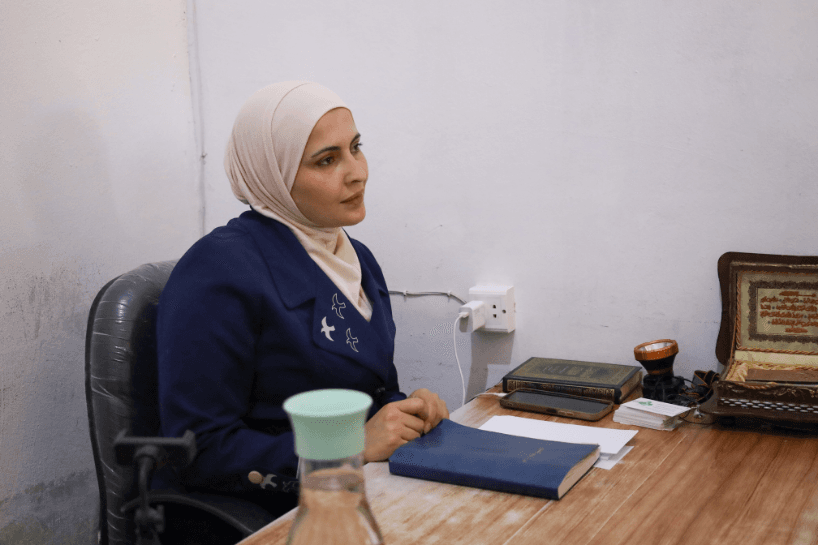

On June 21st, a woman arrived at the door of the clinic in Sfireh, Lebanon, in advanced labor. She didn't even make it to the examination bed: she gave birth just steps from the entrance, into the hands of Amna, the midwife running the village's only health post for pregnant women. “There was no time to think,” Amna recalls. “I realized right away the baby was coming then and there. If she had left for Aleppo, she would never have made it in time.”
The woman lived in extreme poverty and knew little about childbirth risks. Without the clinic, she would have faced a one-hour mountain journey to the nearest hospital. Today, both mother and baby are doing well.
Located at over 1,100 meters above sea level in the mountains of the Dennieh district in northern Lebanon, Sfireh is a rural community where Sunnis and Maronites have coexisted for generations, living off mountain fruit orchards and farming. But the economic crisis gripping Lebanon has taken a drastic toll: heating diesel is unaffordable in winter, electricity is out for most of the day, and healthcare centers are stripped to a minimum. The youth are leaving. Only the elderly and those with no other choice remain.
Amna chose to stay. For years, she watched local women face an impossible dilemma. “I saw women in their eighth month waiting days just for a check-up,” she remembers. “Others gave up entirely because the trip to Aleppo was too expensive. And for a pregnant woman on these mountain roads in winter, that’s a real danger.” So, she began visiting homes herself—providing check-ups, basic care, and first aid without a proper space or medical equipment.
The turning point came with a grant call from Pro Terra Sancta. Amna submitted her application and secured the funding to set up a fully equipped clinic dedicated to local women. First, however, she completed a ten-day training course in project management organized by the NGO. “I knew how to do my job, but I didn’t know how to manage a budget,” she explains. “The course helped me bring structure: what to buy first, how to schedule visits, and how to keep the clinic running even after the funding ends.” At the end of 2024, her business plan was approved, turning the project into a reality.
Since then, the clinic has supported hundreds of women. For many of them, it was the first time a pregnancy was monitored from start to finish.
Amna reminds us every day how the choice to stay in a community can transform lives. Her story addresses an emergency that risked remaining invisible—a hidden need overshadowed by seemingly more urgent crises, yet painfully obvious to those living through it. “Some people ask me why I don’t leave too,” Amna says. “But if I leave, who will these women turn to?”