

Thirty-three dense pages, written from Jerusalem in the midst of a crisis that seems never-ending, with the clarity of one who is not deluded, yet refuses to give up. This letter is neither a press release nor a political analysis: it is something much rarer.
It is a man trying to tell his community—and perhaps all of us—where he stands, what he sees, and why it is still worth staying. The author is the Patriarch of Jerusalem, Pierbattista Pizzaballa.
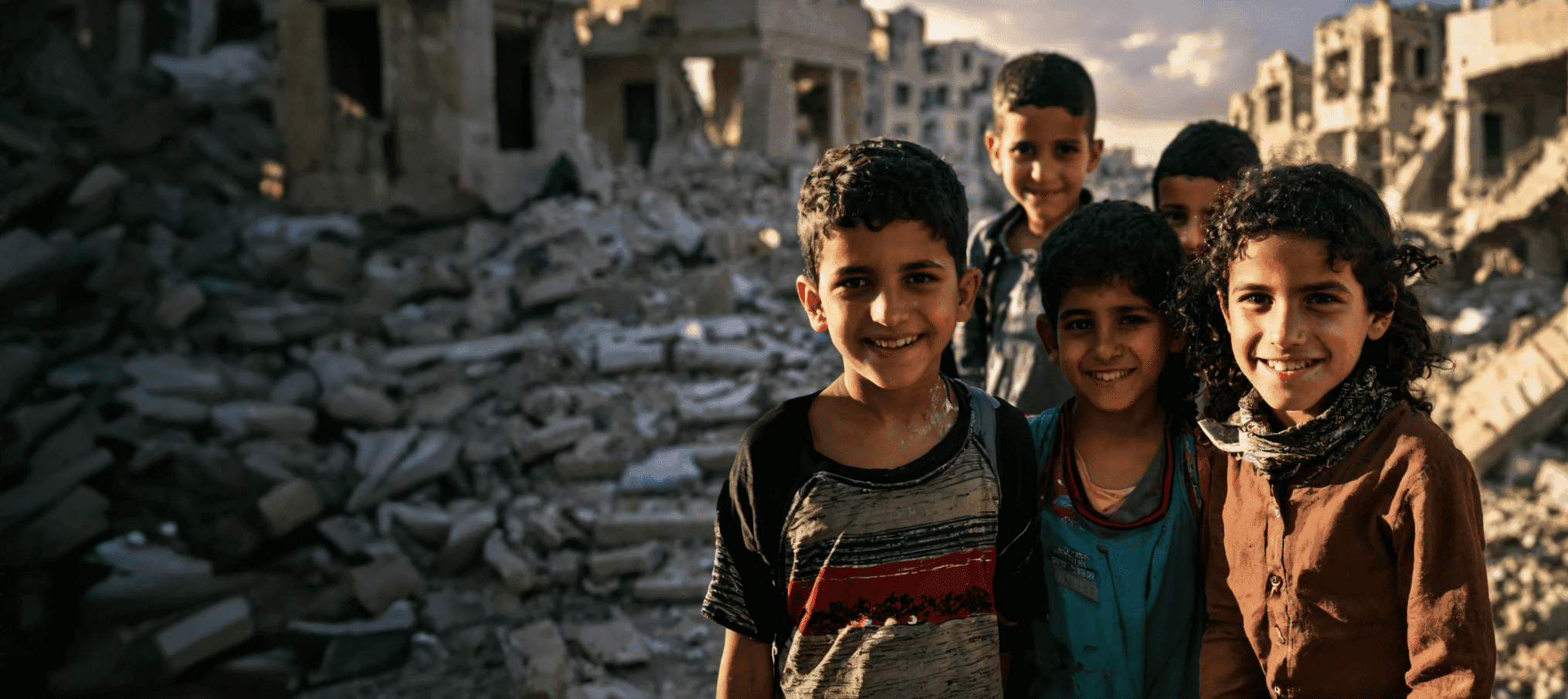
The starting point is honest to the point of being painful. Pizzaballa describes a Middle East marked by the dissolution of bonds, by fear, and by a distrust of words. "Coexistence," "dialogue," "justice": terms that seem worn out, hollowed, belonging to a world that no longer exists. Christian communities live within this weariness, not apart from it. War is not a background: it is the ground upon which they walk every day.
And yet—and this is where the letter becomes something beautiful—the Patriarch does not stop at the diagnosis. He asks: how does one inhabit this disorder as a Christian? Not how does one escape it, but how does one stay within it without being absorbed by it.
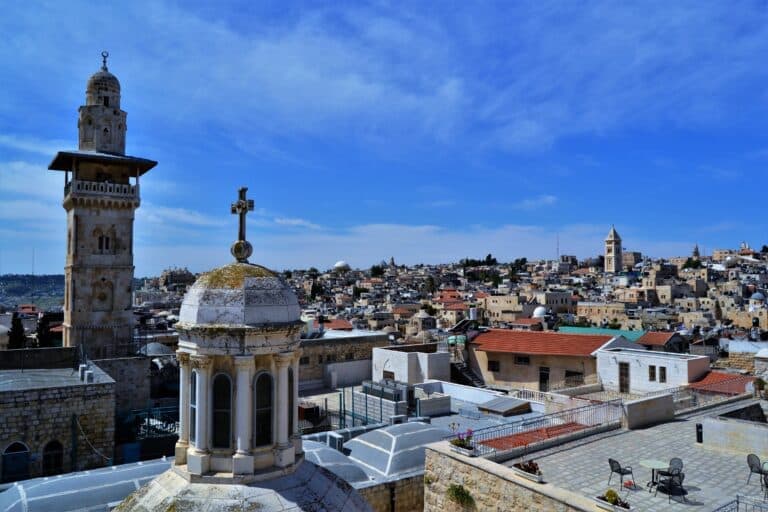
The answer he builds is biblical, solid and, in a sense, surprising. It begins with the image of the New Jerusalem from the Book of Revelation: a city that does not rise by its own strength but descends from heaven, received as a gift. A city without a temple—because God is not concentrated in one space but dwells in the midst of His people. A city with gates always open, enriched by what other nations bring. A city whose vocation is not to defend itself, but to heal.
It is an image that does not offer consolation in the easy sense of the term. It does not say that everything will be fine. It says something more demanding: that good can be born anywhere, even here, even now. And that this possibility generates a responsibility.
What is most striking in the letter is the flat refusal of all rhetoric. Pizzaballa does not use heroism as a category. He does not ask for impossible gestures. He asks people to pray, to keep schools open, to stay close to the elderly, to avoid violent words, to welcome those who come from outside. Minimal gestures, in appearance. But it is precisely these gestures—multiplied in thousands of stories that don’t make the news—that prevent the world from being reduced only to what is shown on the news.
There is an important phrase in those pages: "Christians in the Holy Land are not an awkward third party. They are salt, light, and leaven within the societies to which they belong." Not a neutral buffer. Not a separate body. People who share the history, the language, and the wounds of their people—and try to ferment it from within with a different vision.
We thank the Patriarch for these words. For the struggle we sense behind them. For the courage not to simplify when everything pushes toward doing so. For having written a letter that is not for specialists, but for families, parishes, and schools: for anyone, even far from that land, who still wonders how to hope without being naive.
The lesson we carry with us is simple. Hope is not optimism. It is not thinking that things will go well. It is knowing that good can be born even in the worst situations, and that this—and only this—generates a responsibility. For us, from here, it means not looking away. It means supporting those who stay, those who rebuild, those who heal, those who teach. It means understanding that Jerusalem does not belong to anyone exclusively, but concerns everyone—because it is the heart of a story that is also our own.
We return to Jerusalem with joy. Not because it is easy. But because, as Pizzaballa writes, the Easter joy knows that light overcomes darkness, that life defeats death, and that love disarms hatred. And so far, no war has succeeded in fully proving that wrong.