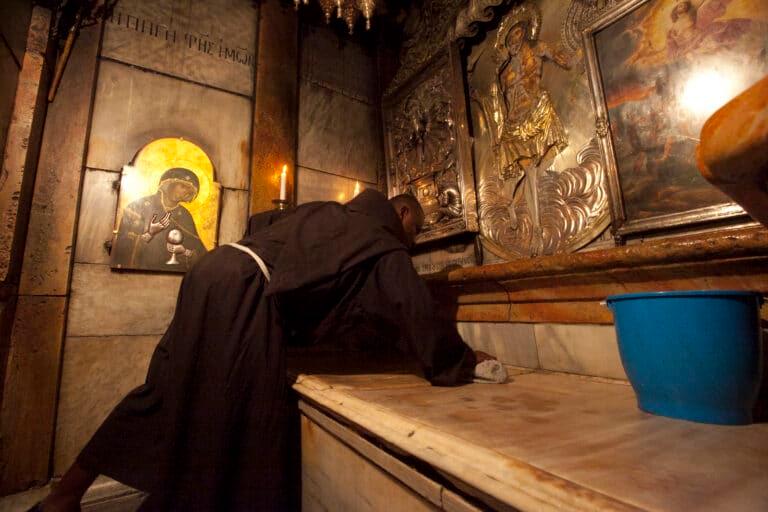


The Holy Sepulchre is closed.
No pilgrims or tourists enter; the continuous flow of people that usually moves through that place has stopped. But inside, the friars are still there. They pray, they celebrate, they guard. They stay. It is a simple word, almost poor. And yet, it says so much more than many others. In these days, this very verb comes to mind: to stay. Not to change the situation. Not to solve it. Not to bypass it. To stay inside it. To remain.
The meaning of remaining
In the Gospel, beneath the cross, we find exactly this. Mary stood. The women stood. The disciple stood. They didn’t have a solution in their hands; they couldn’t stop the injustice or avoid the pain. But they did not run away. And that remaining, in the moment, was already everything: faithfulness, love, witness.
There are situations where you cannot do much. You cannot unblock, fix, convince, or restore order. You can, however, remain. And at times, it is the most important gesture, because it prevents evil from having the last word on how you inhabit that situation.
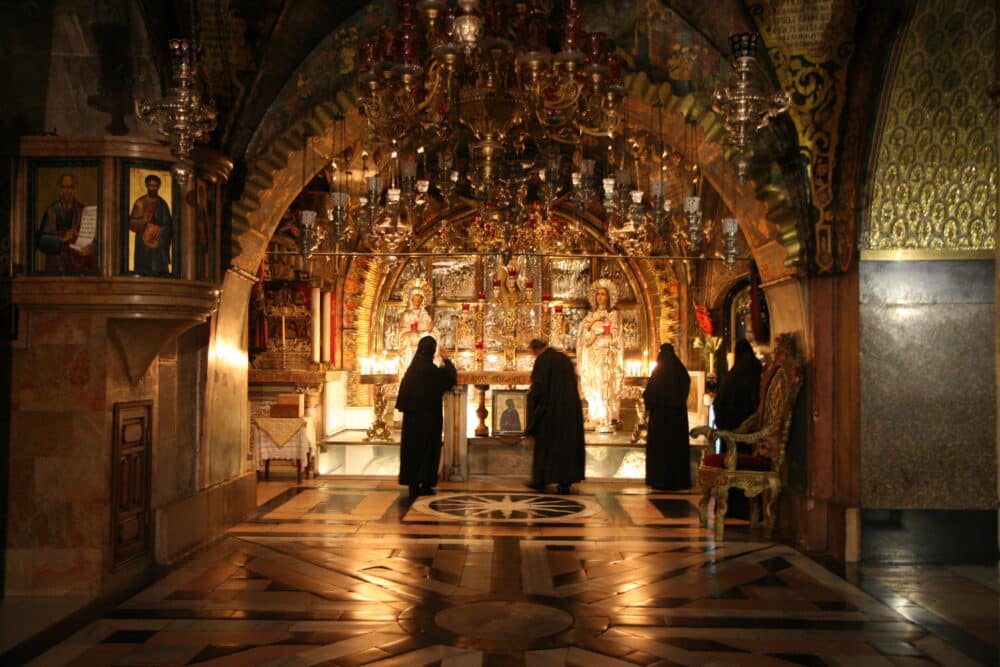
The Holy Sepulchre and the presence of the friars
The closed Holy Sepulchre places us back in front of an essential truth for today’s Holy Land. We are used to looking at results, numbers, immediate effectiveness: what changes, what it produces, what it leaves behind. It is a fair question, but it is not enough. Because there are things that bear fruit only over time. And there are presences that have value even when they seem unproductive.
The history of the friars proves this. For two centuries, they were locked inside that empty tomb. A stretch of time almost impossible to imagine. Yet, they did not leave. They remained to guard, to pray, to keep a presence alive—without seeing the fruits. They did not see them. We do.
We see them in the fact that those places are still alive. We see them in the continuity of a Christian presence that has never been interrupted, in the prayer that continues, in the memory that has not been lost, and in the possibility for millions of people to arrive there and find not a museum, but a living place. All of this exists because someone, for centuries, stayed. Even when there was nothing to show. Even when it would have been easier to walk away.
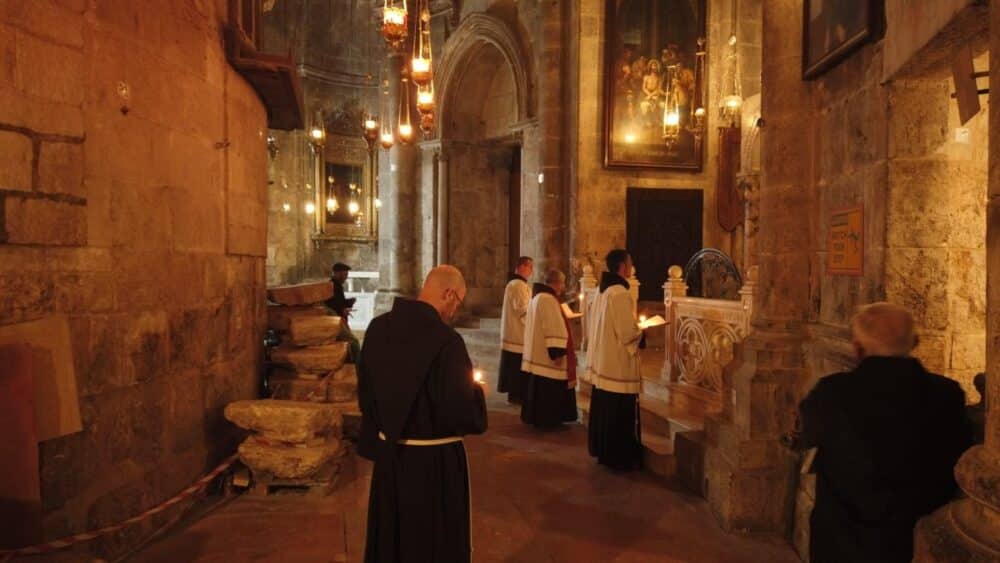
The lesson of the friars
It is a lesson that matters. A good presence is not one that occupies space or raises its voice. It is one that remains within every situation, even the most negative, without letting itself be hollowed out. It is the one that does not flee when everything insistently tells you to "run."
For this reason, the closure of the Holy Sepulchre does not only tell a story of war or limitation. It tells a story of faithfulness. The friars stay. They do not leave. And this staying declares whose side they are on: not on the side of power, not on the side of those who pass through and dominate for a time, but on the side of those who guard, those who remain, those who continue to be there even when it seems useless. History, as always, clarifies things. Not immediately. Sometimes much later. But it clarifies them.
We already know who was on the right side. We know it thanks to those friars who for two centuries remained closed in an empty tomb. They did not see the fruits of their staying. But they made them possible. Goodness, when it is true, does not always win immediately. But it remains. And for that very reason, it leaves a trace.
Non entrano pellegrini o turisti, non entra il flusso continuo di persone che di solito attraversa quel luogo. Ma dentro ci sono ancora i frati. Pregano, celebrano, custodiscono. Stanno. È una parola semplice, quasi povera. Eppure dice molto più di tante altre. In questi giorni torna in mente proprio questo verbo: stare. Non cambiare la situazione. Non risolverla. Non aggirarla. Starci dentro. Restare.