It is always difficult to find the words to start recounting something that has profoundly changed one's spirit. Over these past few days, I have thought many times that I needed to bring a piece of Syria back with me: not to tell a story of a youthful adventure, but to bear witness to what I have seen and experienced.
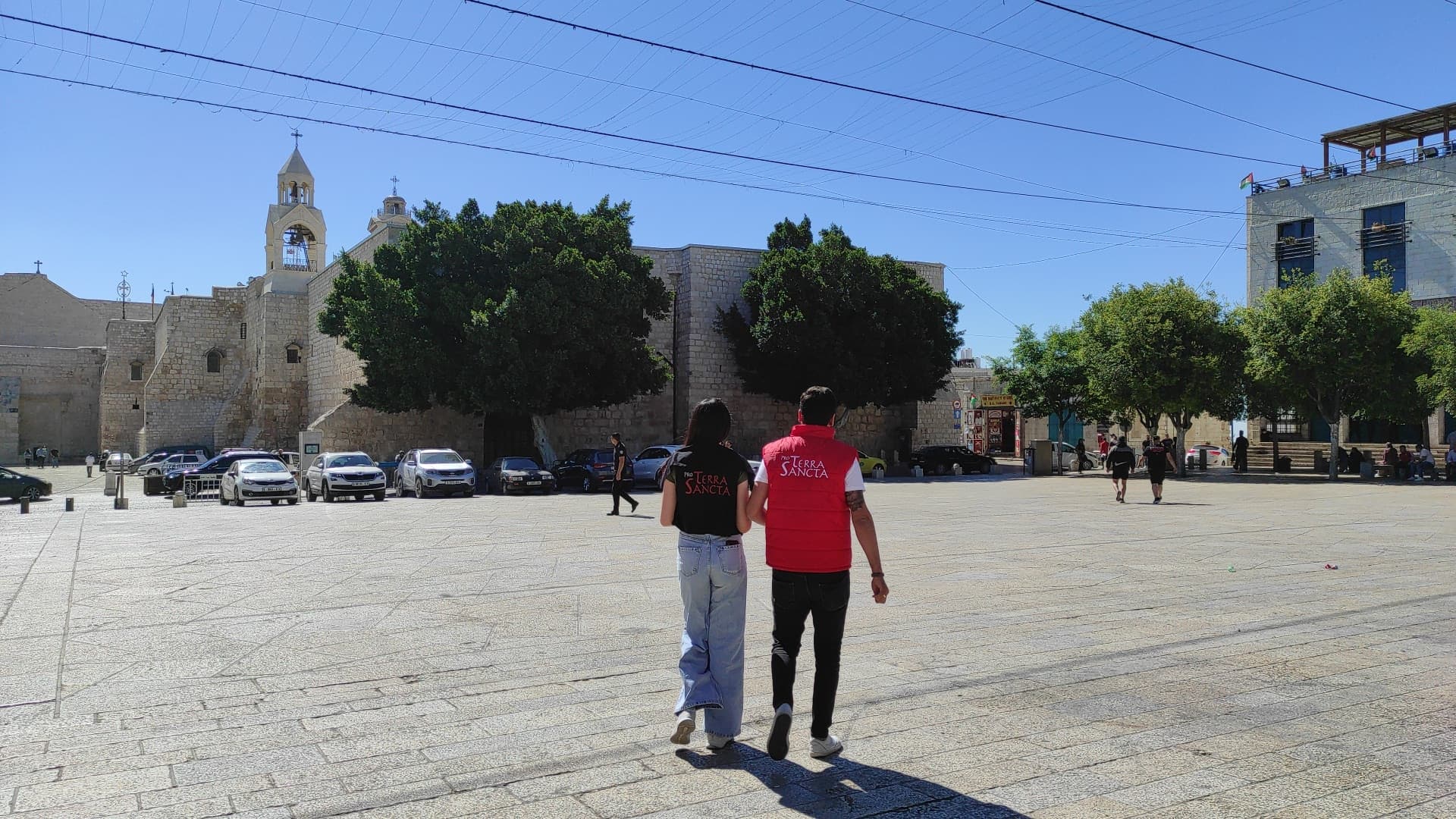
Giulia, a friend I met at university, and I spent the month of August in Aleppo as volunteers in the local office of Pro Terra Sancta. Giulia studies the history of Christians in Syria; I arrived driven by a curiosity that grew over the past year, fueled by encounters and questions that brought me all the way here.
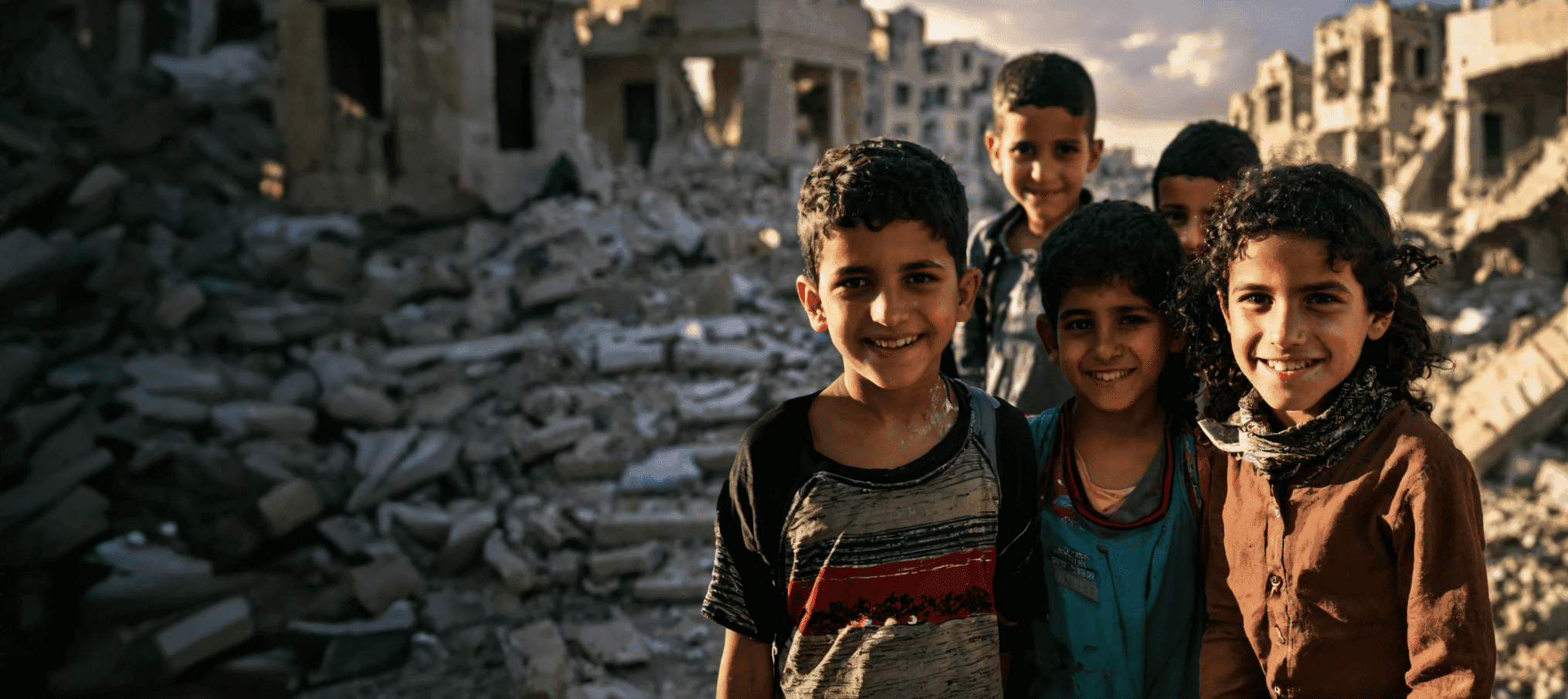
The first real impact with Aleppo comes the day after our arrival. The city immediately appears for what it is: a city still scarred by war. In the old part of town, the contrast is hard to ignore. On one side, reconstructed buildings, reopened shops, and traffic slowly resuming its course; on the other, entire destroyed blocks, gutted houses, and bullet-riddled walls.
Bassel, one of the young men accompanying us, tells of when, as a teenager, he had to cross an area exposed to snipers to pick up his ID card. He tells it almost laughing, as if irony were a way to internally fight the trauma suffered from the war. Then his tone changes: many people, he explains, died while running simple errands, hit by snipers stationed at strategic points across the city.
At sunset, we reach the grand covered market, the old caravanserai that for centuries welcomed merchants from all over the Middle East. Today, a large part of the structure has collapsed. The sections still standing are interspersed with abandoned spaces. Facing those ruins, I wonder how much anger remains in the people who live here. Antony, head of the Aleppo office of Pro Terra Sancta, does not dodge the question. "Yes, anger often returns. It was there in the past and it is still there today." Then he adds that meeting people coming from the outside allows the people of Aleppo to look at their city once again, to recognize what was lost and, at the same time, what can be rebuilt.
This is the trait that emerges most during the days spent in Aleppo. The city is not described only through what it has lost, but through what it can become again.
And it is here that the work of Pro Terra Sancta takes on a special meaning.
In the educational centers of East Aleppo, one of the neighborhoods hardest hit by the war, young people and adults can study, graduate, and learn a language. Most of the students are Muslim. The Christian teachers tell of children who stay past class hours and describe those places as home. Joseph, one of the leaders, summarizes it like this: "Christianity allows me not to look at religion, but at the need these children have. With them, it is clear to me that my task, even before being a teacher, is to love." The same practical impact is found in supporting the poorest families through the installation of solar panels. For one family, electricity means being able to use a machine to lift a disabled youth and allow him to be washed and undergo physical therapy. For another, it simply means being able to turn on a small fan and let the children sleep through the night. These are minimal interventions compared to the scale of the Syrian crisis. It is their concrete nature, however, that makes them significant.
In a city where entire neighborhoods have been destroyed, reconstruction starts from the most everyday elements: a fan, a lit room, the opportunity to study, or to care for a sick person.
But after days in Aleppo, it seems to me that the issue goes deeper.
Reconstruction is not just about buildings. It is about the opportunity, for those who stayed, to once again consider their life as something worth building. I had thought I was coming to Syria to see a land scarred by war. I certainly found destruction. But inside that destruction, I met people who continue to build, with a tenacious awareness of what they have received and what they are called to leave behind. Aleppo is not a city that has stopped living. It is a city trying to live after being destroyed. And perhaps this is what I take home with me: the realization that, sometimes, rebuilding simply means choosing to stay.