

From Rojava’s democratic experiment to the new offensives of 2026: Luigi Mariani recounts six years in Syria, navigating resistance and betrayed hopes. A profound analysis of the Kurdish people, who have "no friends but the mountains."
The beginning of 2026 presents us with a picture of a country where the hands of history seem to have turned dangerously backward, returning to scenarios many hoped were long gone. While the fall of Assad sparked talk of a political transition, today's reality opens a new chapter of suffering for civilians. In Syria, unfortunately, war never stops; it only changes its face and its protagonists.
We interviewed Luigi Mariani, a humanitarian worker who lived in the country for six years, to gather a firsthand account of this land suspended between the dream of autonomy and the nightmare of new conflicts.
Beyond the Conflict: The Experiment of Democratic Confederalism
You lived and worked in Syria for years. Beyond the headlines and the media narrative, what kind of land did you truly get to know? What kind of Syria emerges from your direct experience on the ground?
I lived and worked for six years in the Kurdish-controlled area, traditionally known as "Rojava" and officially named the "Democratic Autonomous Administration of North and East Syria" (DAANES), following the gains achieved by local forces on the ground since 2012 and the expansion of control over territories seized from the Islamic State. Even from the name, one can sense the libertarian and inclusive spirit that has always animated so-called "democratic confederalism"—a non-state political-social model based on core concepts such as direct democracy, ecology, feminism, and self-organization.
It was a project of peace and coexistence unique in its kind, open to all ethnicities and cultures in the territory, and one that I had the privilege of witnessing firsthand. It was an experiment that was neither easy to apply nor free from flaws, but it was innovative, modern, and had many points of contact with the West. It was opposed partly for ideological reasons, as well as for matters of political balance or territorial disputes.
In your experience and that of your loved ones, what did it mean—and what does it mean today—to be Kurdish in Syria? Is there an episode that, more than others, has stayed with you?
I believe that being Kurdish in Syria (but also in Turkey, Iraq, and Iran, and wherever they may be) means, first and foremost, being and feeling free, but always ready for battle. As I came to know them, the Kurdish people are joyful and welcoming; the value of resistance has been etched into their DNA by historical circumstances and a long past of oppression and injustice. Because, ultimately, what the Kurds want is simply to live in peace. Having never been able to obtain a state of their own, they have always been forced to fight for survival and to assert their rights: to date, only so-called Iraqi Kurdistan enjoys relative independence.
In Syria, too, after the events of recent years, there was hope that the Kurds could carve out a space for autonomy; today, however, it appears evident that the international community ended up relying on Kurdish forces primarily in an anti-ISIS capacity.
There were many difficult moments during my time in NES (North and East Syria), but I remember one significant episode in particular. It was 2018, and we were with some colleagues in a restaurant in Qamishli to celebrate an anniversary. At that very hour, Turkey had launched "Operation Olive Branch" with the intent of conquering Afrin, and dramatic news was arriving from the front.
The atmosphere was heavy, but our colleagues struggled to mask the tension. At a certain point, we all began to sing "Bella Ciao" together, which in Rojava represents a song of rebellion and liberation, without specific political connotations. From that day forward, I would hear it resonate many more times on different occasions, even in its Kurdish-language version.
Roots and Resistance: The Identity of the People of Kurdistan
In your opinion, why do many Kurds choose to stay and not flee, despite Turkish offensives from the north and pressure from Damascus from the south? What does this land represent for those who decide to defend it at the cost of their lives?
As mentioned, in general, the Kurds have a strong sense of identity, which even decades of repression in Syria could not erase. Imagine how they feel now that they have been able to cherish the dream of an independence they have long sought. These are their lands, the same ones that for hundreds of years poets, musicians, and artists have declaimed, sung about, and represented. The tanbur, a typical local stringed instrument, is for a Kurd a powerful symbol of belonging, on par with a weapon.
I still remember when, in 2019, during the Turkish military operation known as "Peace Spring," the international NGO staff was forced to evacuate to nearby Iraqi Kurdistan. Those were dramatic days of great uncertainty, because we didn't know if we would ever return, nor what fate awaited our colleagues. On that occasion, I heard several of them state that they were ready to take up arms to defend their land and their loved ones.
A year ago, the Assad dynasty fell after half a century of absolute power. Based also on your experience as a humanitarian worker, how was Kurdish identity lived and repressed during that regime?
Having arrived in Rojava in 2017, when the Kurds were already consolidating their military presence in north-eastern Syria, I was not able to experience firsthand the repression carried out for decades by the Assad regime, but I often heard about it from those who lived through it. Since the 1960s and 70s, in fact, the Baathist government had carried out a systematic strategy of "forced Arabization" of the northern territories, effectively transforming the demography of some areas through the deportation of Kurdish families, the confiscation of their properties, and the creation of Arab settlements, in order to create the so-called "Arab belt" on the border with Turkey.
Furthermore, thousands of Kurds were denied Syrian citizenship, and the use of the language was forbidden in schools, in official documents, and even in the naming of villages and places; despite everything, the culture of this people has survived even here, thanks above all to the strong sense of identity passed down from family to family.
How was al-Sharaa perceived by the Kurdish communities? Was there ever any hope that he would recognize their autonomy?
I think that at the beginning there was a certain mix of feelings about it. On one hand, the President's past militancy in Al-Nusra could only create distrust among the Kurds, since they had fought him on the ground for years. On the other hand, the sudden collapse of the Assad regime opened up new, possible scenarios for the integration of the Kurds into the "new Syria," and perhaps the conviction had matured that they could maintain at least part of the autonomy won at such a high price during the years of conflict. Especially since al-Sharaa, having put on a suit and tie, seemed to have acquired a certain credibility, even and especially at an international level.
The Kurdish authorities themselves wanted to give a signal of readiness for dialogue and integration from the very beginning, by, for example, raising the new Syrian flag on all public buildings. But the first disappointment soon arrived: the new constituent assembly, in fact, confirmed the official name "Syrian Arab Republic," with all due respect to all the ethnic minorities in the country, Kurds included. Several meetings, long negotiations, and an agreement signed in March 2025 (and never implemented) served as the premise for the events of the last month: the clashes involving government forces in the Kurdish neighborhoods of Aleppo, Ashrafieh and Sheikh Maqsoud, last December, and the violence that followed, have opened a new, delicate phase in the dispute between the Kurds and the interim government. And one can well imagine that the trust of the Kurds today is strongly compromised.
The Siege of the Kurds: Damascus’ Advance and the Humanitarian Crisis
The escalation between December and January was lightning-fast: from the fall of Raqqa to the direct attack on the autonomous regions of Rojava, which had resisted for 14 years. How did we reach this point in just a few months, and what is the actual humanitarian situation on the ground after the latest bombings?
After the surrender of Aleppo, the SDF (Syrian Democratic Forces) were asked to withdraw east of the Euphrates. Soon, however, the Syrian army's offensive became increasingly aggressive, pushing far beyond the stated objective and quickly occupying several strategic centers, including Raqqa, the former capital of the Islamic State. These are all Arab-majority areas that the Kurds perhaps had little interest in defending or maintaining, so much so that they withdrew voluntarily from some of them based on fragile truces and agreements that were often disregarded.
Facilitating the advance on the ground—besides the substantial inaction of the American-led coalition forces—were certain local Arab tribes, who progressively shifted their alliances, effectively clearing the way for government troops. A recurring saying bitterly summarizes this sense of isolation: "The Kurds have no friends but the mountains."
The advance has currently halted at the gates of Hassakeh (an Arab-majority city with a significant Kurdish presence) at the express request of the Americans. The Sinaa prison is located in the city, housing about 5,000 ISIS militants, and it seems there is an agreement to transfer them to Iraq. At the moment, a fragile ceasefire is in effect, which appears functional to guarantee this operation; after that, no one knows what will happen.
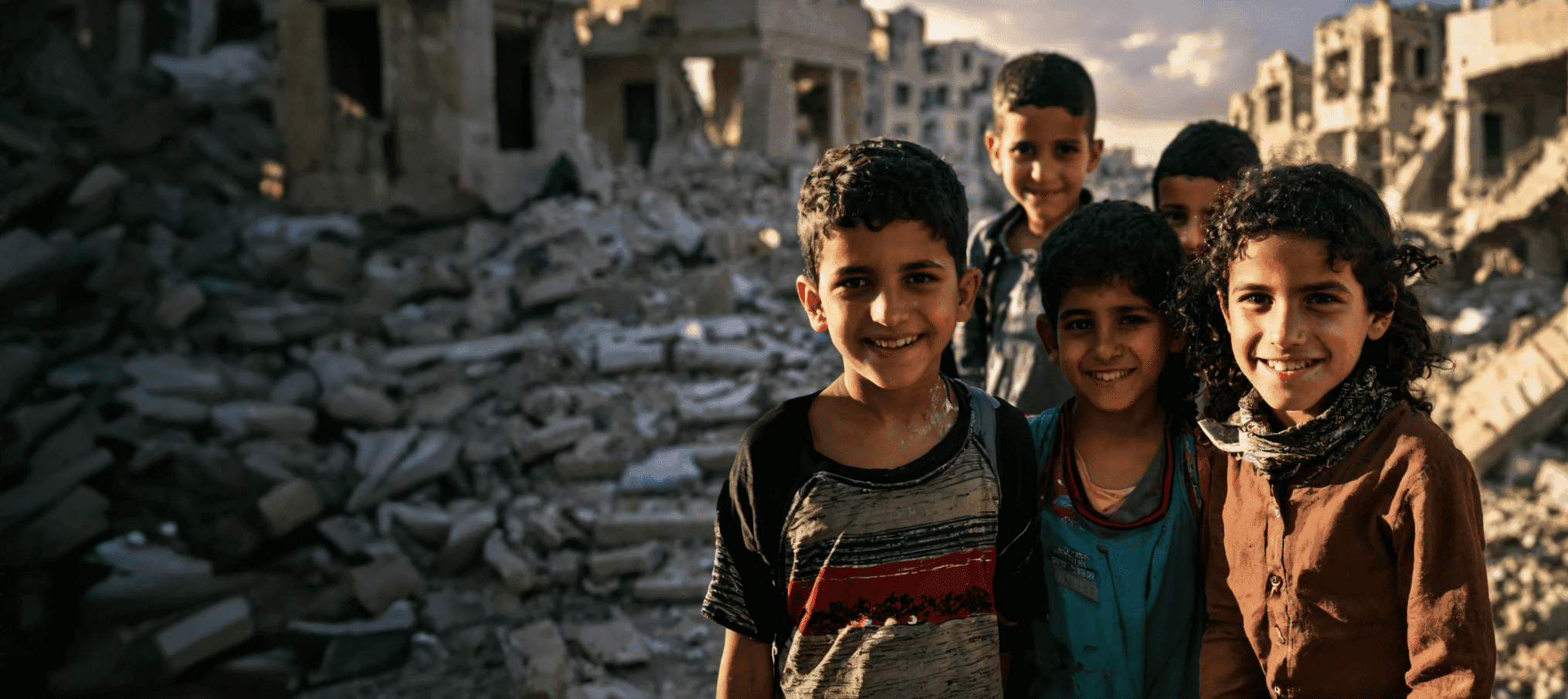
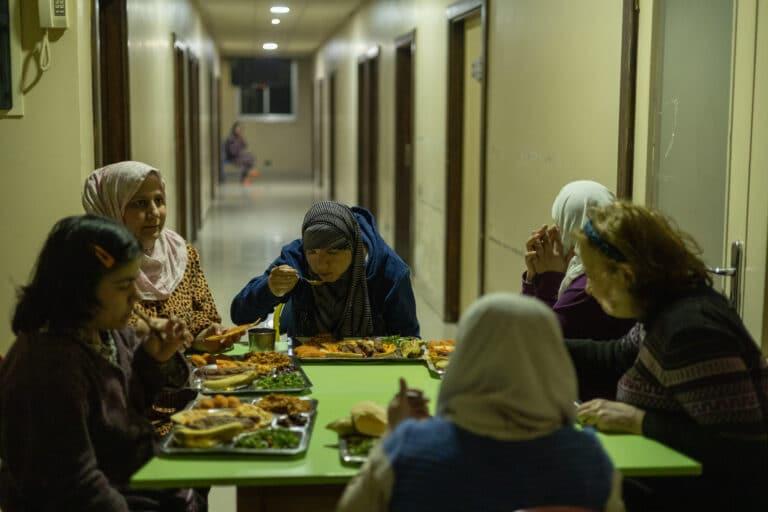
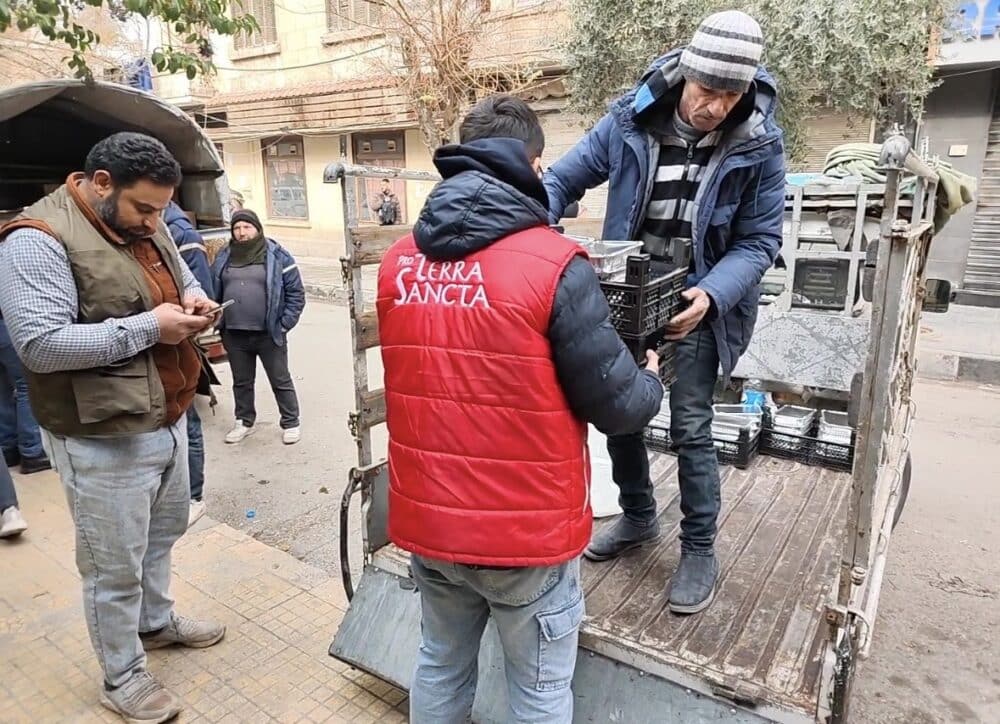
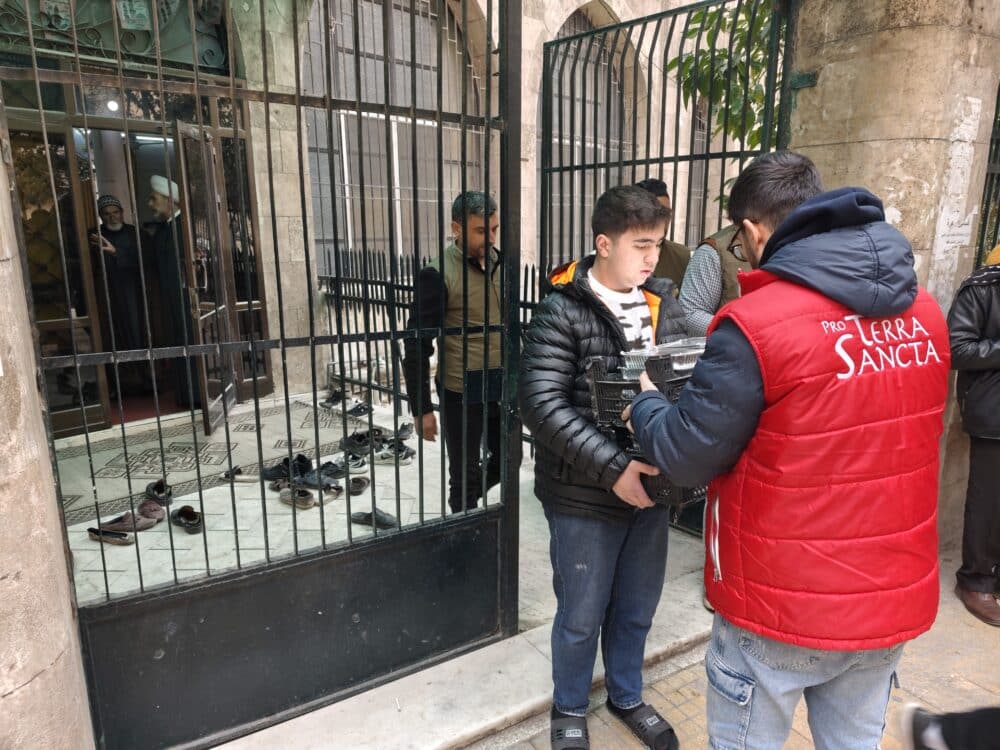
Meanwhile, the clashes have triggered a new humanitarian crisis. Since January 22nd, over 15,000 displaced people have been forced to flee north of Hassakeh, mostly around the cities of Qamishli and Al-Malikeyyeh. The most urgent needs include emergency shelter and winter supplies, food or cash assistance, mobile medical services, and water/sanitation interventions to prevent epidemics. Psychosocial support is also required to protect the most vulnerable, namely women and children, considering that many families have been displaced four or five times in recent years.
A tragedy within a tragedy is unfolding in Kobane, now under siege once again. Thousands of displaced people have found refuge there, but water and electricity supplies have been cut off in the area; a snowstorm has further worsened the situation, and the population is forced to melt ice for drinking water. Five children have already died due to the freezing winter temperatures. A humanitarian corridor has been opened to send aid with government authorization, but with a battle looming on the horizon, the outlook is not good.
After everything that has happened, in your opinion, is there still room for a compromise that saves Kurdish autonomy?
Today, the prevailing sentiment for Mazloum Abdi—the SDF General Commander in charge of negotiations with the interim government—is likely the desire to spare his people a bloodbath, even with the awareness that any agreement risks backfiring. For this reason, he has launched a call for general mobilization to all Kurds in Syria and neighboring countries, and the response has been massive. In any case, considering the prospect of becoming—from an institutional point of view—part of the Syrian state, the priority for Kurdish authorities should be to secure civilians and ensure that the massacres already seen in other parts of the country are not repeated.
From this perspective, autonomy no longer seems to be an option. Certainly, reading the preamble of the Social Contract that established the DAANES brings a certain bitterness and a strong sense of a dream of peace and freedom that has now vanished:
"We, the daughters and sons of northeast Syria—Kurds, Arabs, Assyrians, Syriacs, Turkmen, Armenians, Circassians, Chechens, Muslims, Christians, and Yazidis—in the awareness and conviction of the duty upon us from the martyrs, in response to the demands of our peoples to live with dignity and in response to the great sacrifices made by Syrians, have gathered to establish a democratic system in northeast Syria, to form a basis for the construction of a future Syria, without racist tendencies, discrimination, exclusion, or the marginalization of any identity."