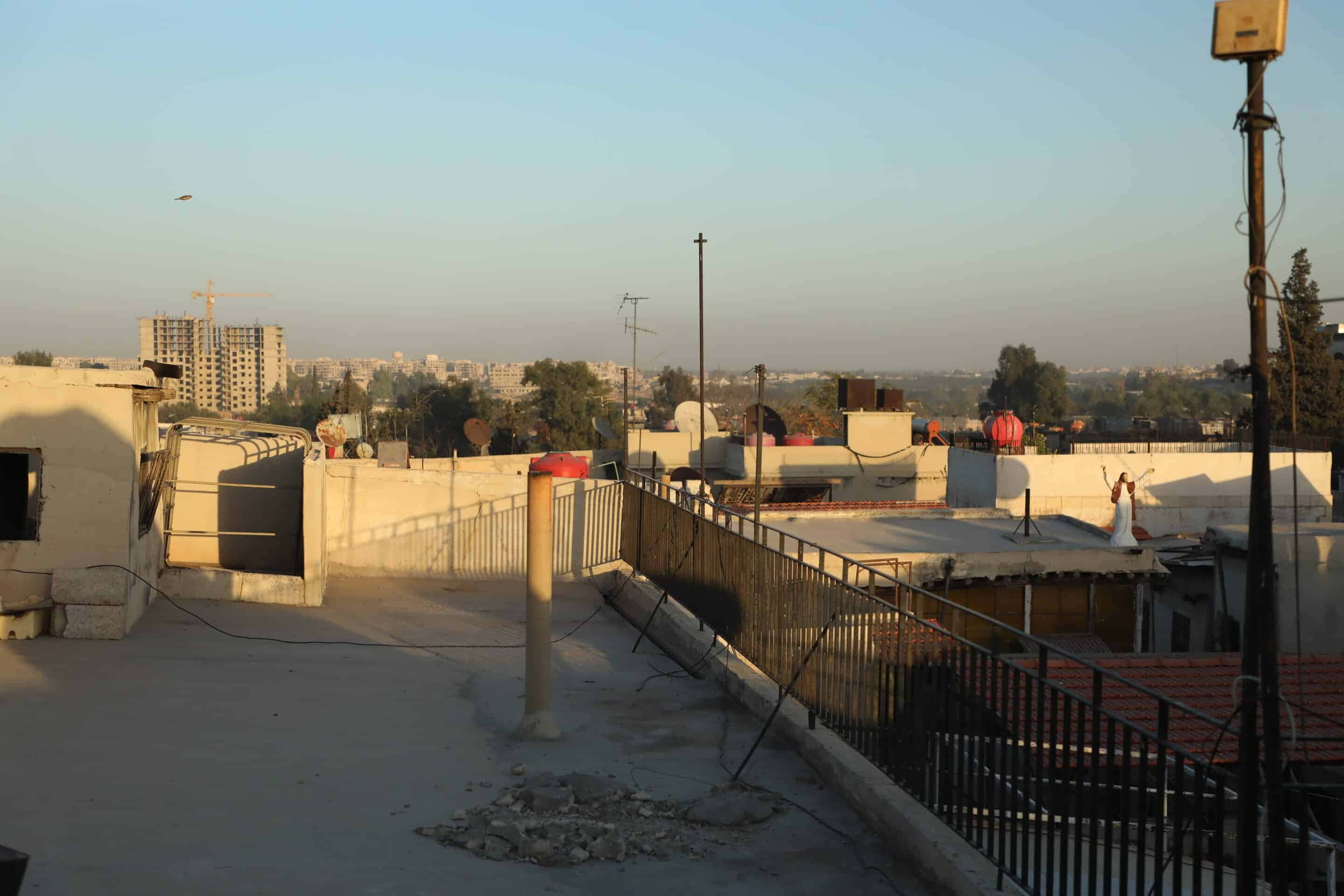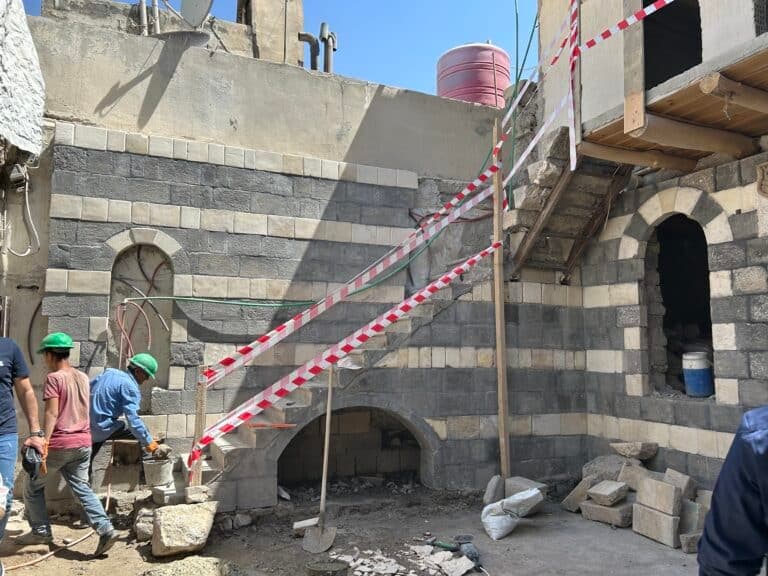


In the heart of the Old City of Damascus, Pro Terra Sancta recovers and renovates abandoned or destroyed properties, contributing to the revitalization of the Saint Ananias area. This effort is part of a larger redevelopment project for the sanctuary and its surrounding neighborhood, which includes three buildings and the main square.
Syria is navigating a fragile transition following decades of authoritarian rule. The new Islamist government remains weak and lacks deep roots across the country, struggling to ensure stability and political inclusion within an increasingly tense regional landscape. Cities like Aleppo and Damascus face daily battles with poverty, a lack of essential services, and the lingering ruins of a decade-long war. Meanwhile, true reconstruction—built on trust, social cohesion, and functioning institutions—remains a distant goal.
In this precarious environment marked by profound hardship, the project to restore the Sanctuary of Saint Ananias and its surrounding buildings in Damascus takes on a particularly significant value.
It was in Damascus, the Syrian capital, that Saul of Tarsus was converted to faith in Jesus Christ, taking the name Paul. Much like Paul's own journey, the history of Damascus is a testament to both love and violence. It is a love that united the first communities of Jesus' disciples, who were baptized as 'Christians' for the very first time in this land.
By enhancing this religious, historical, and cultural site, the project supports the local Christian community— which faces the risk of marginalization— while simultaneously contributing to the protection of Syria's cultural heritage. This initiative aims to return to the city a place open to all: a space of hospitality, memory, and encounter that fosters interaction among all local communities, beyond the Christian one, after years of war and division.
The project involves the recovery of three properties owned by the Custody of the Holy Land, along with the adjacent square. Together with the Sanctuary, these areas require significant redevelopment and restoration.
Community Center
Our goal is to create a cornerstone for the community: a dynamic and welcoming space designed primarily for young people to foster socialization and participation. The center will house various areas dedicated to recreational, cultural, and educational activities, including art workshops, music rooms, and spaces for events and community gatherings. Construction is expected to be completed in 2026.
Jaffar House
A stunning traditional Damascene residence historically linked to the Sanctuary of Saint Ananias, featuring apartments, a courtyard, and a garden. Following an initial phase of demolition and stabilization, the renovation is currently in the planning stage. The house will be dedicated to welcoming elderly individuals who are alone or no longer self-sufficient. Additionally, it will host a music school where young students can train and interact with the elderly, fostering a meaningful intergenerational bond.
Guest House
We are also developing two guest houses in the Bab Touma neighborhood, on the eastern side of the Sanctuary of Saint Ananias. These facilities will be dedicated to welcoming pilgrims and visitors, providing a space for hospitality, encounter, and shared experiences.
The square
Our objective for the square is ambitious: we plan to conduct archaeological excavations to unearth the remains of an underground Byzantine church. Historical sources suggest this could be the Musallaba Church, likely built to encompass the Sanctuary of Ananias. Such a discovery would significantly enrich the historical knowledge of the site, confirming the continuity of worship over centuries. It would also expand the areas accessible to visitors, offering the people of Damascus a deeper understanding of the history of this profound location.