



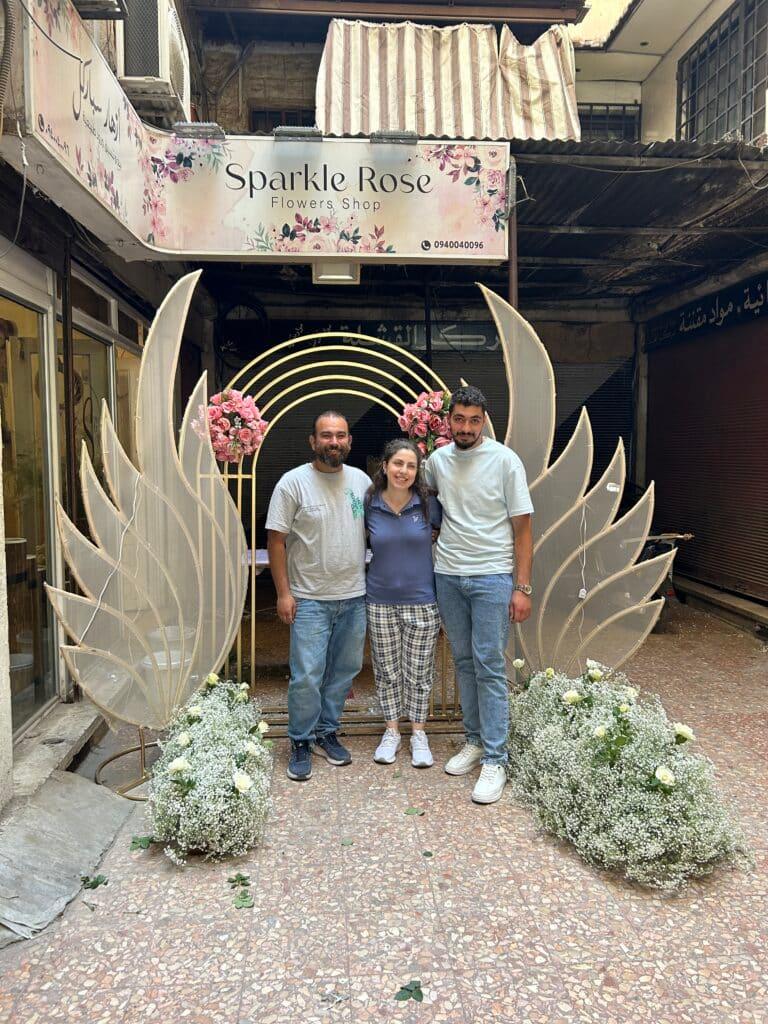

In Syria, there often seems to be room only for survival or the humanitarian sector—a paradox that frequently stifles talent and aspirations. But in Damascus, Madline and Elias challenged this logic.
In Damascus, Madline and Elias Abozaid both worked for an NGO. In Syria, the humanitarian sector is often the only one that guarantees a regular salary and an economically sustainable outlook. It is a compromise. For many, it means setting aside their studies, talents, and aspirations to learn how to live off what is available, rather than what they truly want. It is a silent paradox: you help someone else restart their life, while your own future remains locked in a drawer.
For Madline and Elias, that dream had a clear name: Sparkle Rose, a business dedicated to decorations for events and weddings. An idea that might seem secondary in a country crossing through crisis and instability. But those who live in Damascus know that normalcy is not a routine, but an achievement. A bouquet delivered on time, a hall decorated, a party held in spite of everything—these are real signs of a society trying to stay on its feet.
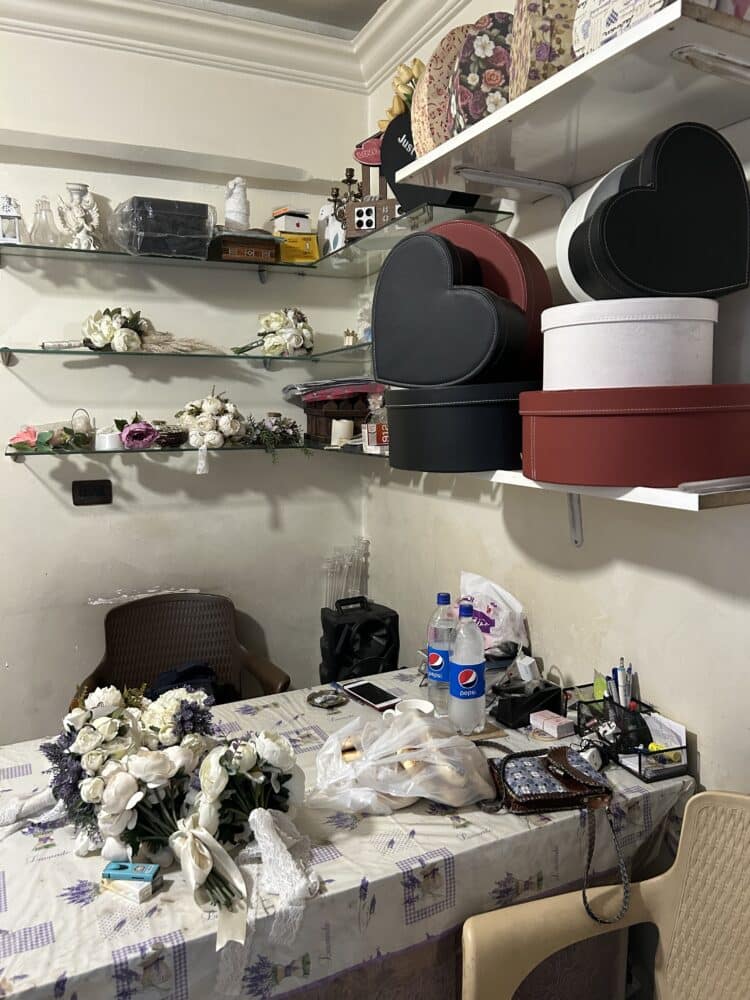
The turning point came when they discovered WIP – Work In Progress, a program supported by Pro Terra Sancta that offers training, mentoring, and initial support to those who want to transform an idea into a real business. Madline and Elias decided to give it a try. They presented Sparkle Rose, putting into writing what until then had remained a cautious dream, kept alive only in end-of-the-day conversations.
The project was approved in 2022. Then began the most decisive part: quotes, suppliers, material sourcing, deliveries, and nights spent preparing compositions and setups. Often working in parallel with their NGO jobs, the first commission tested them more than they could have imagined: prices changing in a matter of days, uncertain availability, and clients asking for guarantees in a context where nothing is guaranteed. But when they deliver the setup and see a room transformed and filled with joy, they realize that their work is not a whim: it is a service. It is the way a community tells itself that life is not just about war or hunger.
Through WIP, they learned to build a plan, track expenses, set fair prices, communicate with customers, and invest carefully. It also provided someone to accompany them and ask the uncomfortable questions ("Is this model sustainable?", "What happens if a supplier fails?"), helping them choose without improvising. Working side by side, their professional respect transformed into love. Madline and Elias got married and became parents.
It is not a simple fairy tale: it is the story of two people who, while building a business, also stitched back together a family horizon. Those who know them describe them with a simple phrase: "They stopped surviving and started choosing again." Because in Syria, choosing means taking risks with clarity: planning, saving, learning to say no, and defending quality even when everything pushes toward cutting corners.
Today, Sparkle Rose has grown: expanded production, more stable work, and new collaborators hired. In Damascus, this is not just economic growth: it is social responsibility. And this is where the essence of WIP is seen: not just creating jobs, but restoring freedom. The concrete, measurable freedom of being able to imagine one's own future and build it, step by step, within the Syria of today.





