





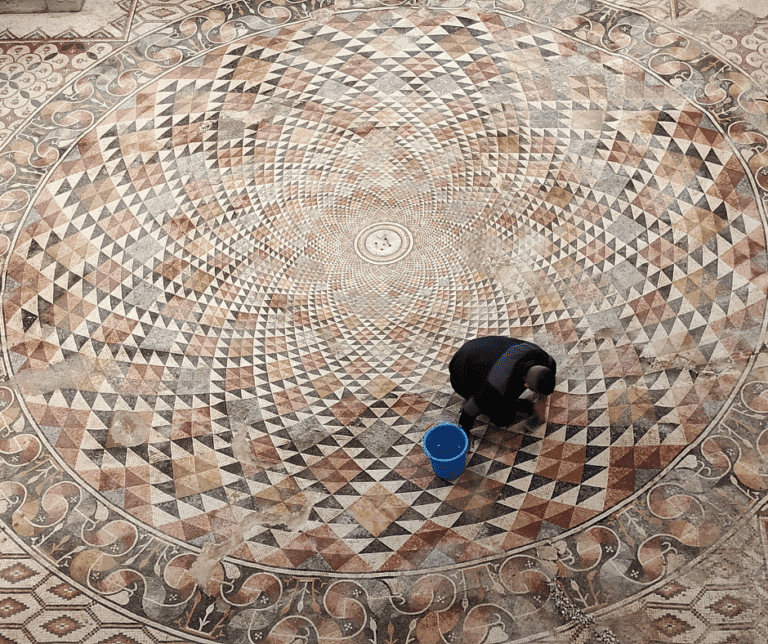


The rebirth of the most famous ‘desert castle’ in Jericho through the partnership between Michele Piccirillo and Osama Hamdan: a friendship that transformed mosaic restoration into a powerful tool for empowerment for the youth of Palestine.
The “Desert Castle”: A Crossroads of History in Palestine
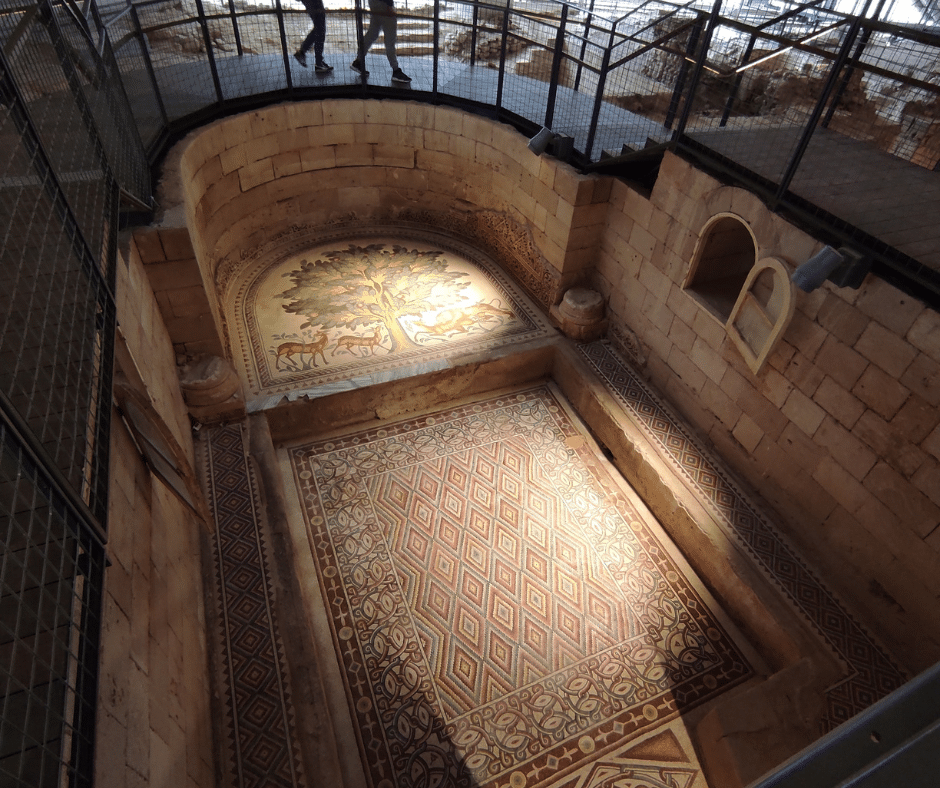
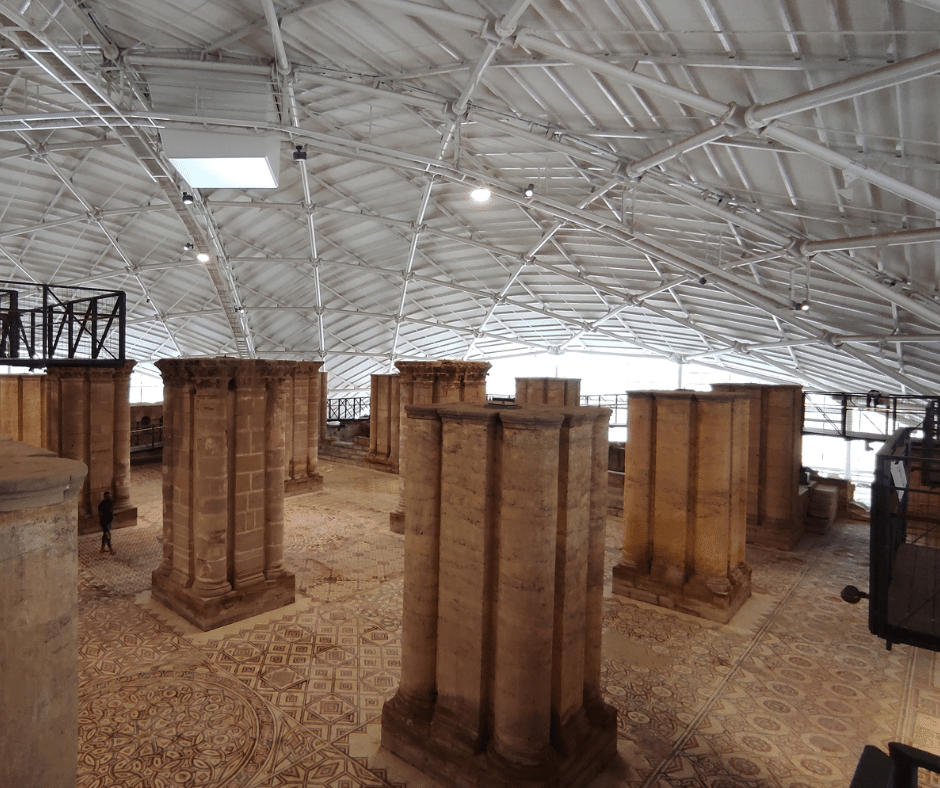
Built in the 8th century AD by Caliph Hishām of the Umayyad dynasty, the palace marked the first major Islamic conquest in Palestine. Indeed, Umayyads chose to garrison the territory through so-called "desert castles": not true military fortresses, but extra-urban residences created to manage agricultural lands and, above all, to maintain political contacts with the nomadic tribes of the area.
Hisham's Palace was the heart of this system. Born around 720 AD as the Caliph’s residence, it soon transformed into a center of power where audiences and meetings with tribal leaders were held.
“But the palace’s destiny changed over the centuries: during the final stages of the structure's implementation, it was destroyed by a devastating earthquake in 749 AD," explains Carla Benelli, head of our projects in Palestine. "Practically nothing remained of the palace, except for its famous mosaics.”
The Legacy of Piccirillo and Hamdan
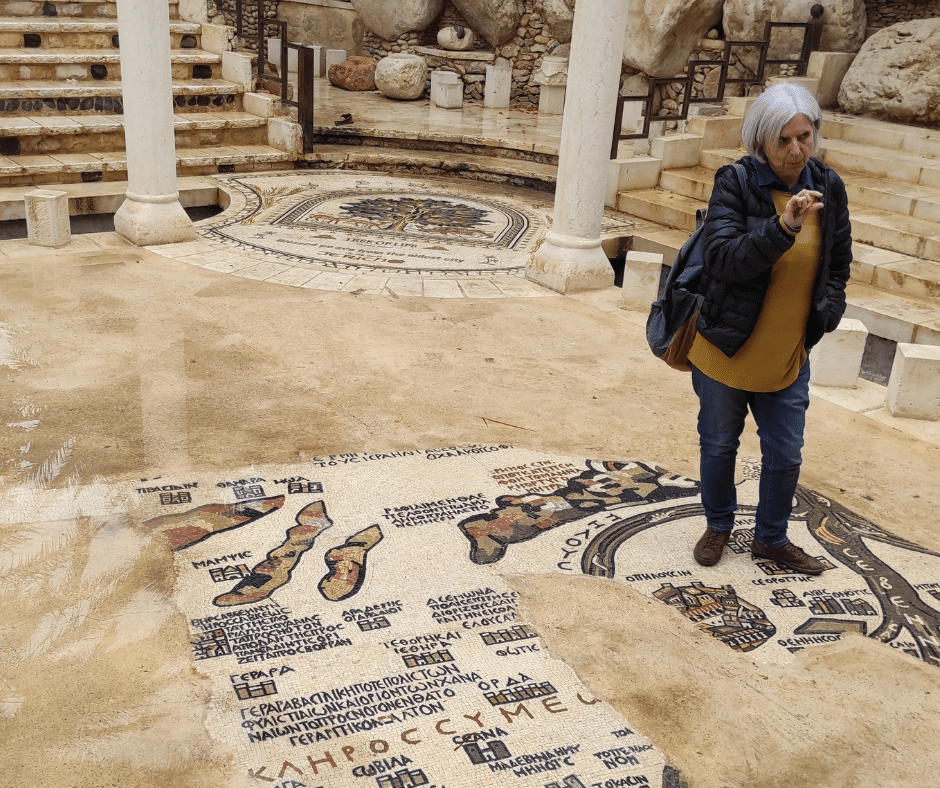
Those very mosaics today tell a story of rebirth that goes beyond archaeology. In fact, Hishām’s Palace in Jericho was restored thanks to the shared vision of Father Michele Piccirillo and architect Osama Hamdan: a partnership that transformed ruins into an engine of redemption for the entire local community. It is a story of social empowerment that we chose to tell in the documentary “In viaggio verso casa” (Journeying Home), dedicated specifically to Osama’s life path in Palestine.
And yet, this synergy between the two was the response to decades of uncertainty: the recovery of Hishām’s mosaics is, in fact, strictly intertwined with the turbulent political events of the 20th century.
From the British Mandate to the Return to Palestine
The first systematic archaeological investigations began during the British Mandate, bringing the palace to light between 1930 and 1948. However, with the outbreak of the first Arab-Israeli war, management of the site passed to the Jordanian administration, which oversaw its protection but initiated the first true restoration works only in 1965.
This phase was short-lived: just two years later, the Six-Day War broke out, marking a dramatic turning point in the Israeli occupation of Palestine and, consequently, in the fate of the palace itself.
Things changed during the early 90s. As Carla Benelli recalls: “After remaining under Israeli control for nearly thirty years, the site and the entire city of Jericho were among the first places in 1994 to be returned to the Palestinians,” finally allowing the local population to reclaim one of its most identity-defining treasures.
Piccirillo in Palestine
In those years of profound transition, the Palestinian Authority identified Father Michele Piccirillo as the ideal interlocutor for the recovery of Hishām’s mosaics. A Franciscan and renowned archaeologist, Piccirillo was not a mere technician: “He was capable of valuing even the most unknown heritage,” Carla continues. His strength lay in a visceral bond with the territory and the conviction that cultural heritage had the power to transform entire societies.
Accepting the challenge, Piccirillo obtained funding from UNESCO, but his intuition went far beyond scientific conservation. For him, the artifact was not to remain an "inert object," but to be transformed into an engine of identity and economic redemption for local communities. Carla Benelli emphasizes this very aspect: “Piccirillo understood that it wasn’t enough to dig or restore: it was necessary to train.”
Thus, he launched a strategic collaboration with the NGO world to create a pioneering project focused on the transmission of skills. The idea was revolutionary for the time: to equip local youth with the technical tools necessary to preserve their own roots. Heritage, therefore, ceased to be an exclusive domain of foreign scholars and was returned to those who lived with it daily.
“In this process of local empowerment, the meeting with architect Osama Hamdan was the decisive spark,” Carla explains.
Osama Hamdan: The “Necessary Bridge”
Thanks to the talent and sensitivity of Osama Hamdan, the restoration of Hishām’s Palace became more than a simple construction site: it became an act of cultural reclamation.
The meeting between him and Father Michele Piccirillo took place in 1997, directly "in the field," among the tiles of the zirdab, the palace's refined private bath. It was in this context that Piccirillo, immediately sensing the scientific depth and human integrity of the architect, decided to entrust him with the first delicate conservation interventions.
In those years, the Palestinian Authority was laboriously seeking its own redemption after decades of oppression. In this climate, the intervention of a foreign expert, however authoritative like Piccirillo, could be perceived with ambivalence. On one hand, there was the need for his scientific expertise; on the other, the fear that a project led by an "outsider" might follow old paternalistic patterns.
If this relationship never slid into a conflict of competence, it was due to Osama’s sensitivity. A Palestinian, the son of refugees but trained at the great Italian school of restoration, he represented the necessary bridge. According to Carla Benelli, his mediation allowed the project to be experienced not as an imposition, but as an opportunity for growth, transforming a potential bureaucratic clash into a formative dialogue.
This harmony was consolidated in 1999 with the birth of the training laboratory. For Piccirillo, it was natural to appoint Osama as director: under his leadership, the first six Palestinian youths began a journey that went far beyond technical learning, maturing a new awareness of their roots and transforming into professionals of excellence.
“Together, they laid the foundations for a school of restoration that today is the pride of the entire region,” Carla highlights. Thirty years later, that group of pioneers remains the only essential point of reference for anyone wishing to work on mosaics in Palestine, proving that the protection of heritage is, first and foremost, an act of freedom.
A Debt of Beauty Toward New Generations
“Osama felt the urgency not to keep for himself the opportunity he had received by studying in Italy. I too, born in Rome to a peasant family and having been able to study thanks to a similar opportunity, felt the same debt,” Carla concludes. “In a place where many are denied access to beauty and growth, putting one's knowledge at the service of everyone is an act of justice.”





