

For several years, Pro Terra Sancta has been collaborating with the Custody of the Holy Land and the Studium Biblicum Franciscanum in setting up the Terra Sancta Museum, the first museum in the world focused on the roots of Christianity and the preservation of the Holy Places.
The museum is nestled in the heart of the Old City of Jerusalem, a historic crossroads of peoples and religions. This multiculturalism is also reflected in the Terra Sancta Museum, which tells the story of the Christian presence in the Holy Land through unique archaeological and artistic collections. It is divided into three sections: a multimedia section – inaugurated in February 2016 – an archaeological section, and a historical section, shedding light on different aspects of the history of Christians in the Holy Land.
The projects related to the Terra Sancta Museum are twofold and have been running in parallel for several years:
Restoration and Renovation
The first project focused on the setup and opening to the public of the new exhibition halls. Indeed, during 2023, the halls dedicated to Bethlehem, Nazareth, Dominus Flevit, and the Holy Sepulchre were completed, thanks to the work of various teams of restorers, designers, and laborers. The works, coordinated by the museum project created by architect Tortelli, also involve many local workers; this choice fosters the exchange of experiences and ideas within the construction site, consequently allowing for the growth and specialization of the skills of the workers involved. In 2025, the second phase of the project was consolidated: renovated spaces and an active office at Musa Efendi, one of the Terra Sancta Museum's premises dedicated to educational and cultural activities. The very same spirit of encounter and brotherhood that binds the museum to Jerusalem now makes it difficult to face this moment in which borders are impassable, but at the same time, it demands a greater commitment to continue designing a place where, once the current emergency ends, we can return to meet one another.
Stories from the Heritage: Education and Training Activities
The second project shifts to the education side: “The Heritage Education Hub for Palestinian Youth”, launched in 2024 and funded by the European Commission's East Jerusalem Program, targets the large Palestinian community living in East Jerusalem, particularly its youngest members. For this minority, an identity issue emerges forcefully: the long-lasting conflict has led young Palestinians in Jerusalem into a cultural isolation from which it is difficult to escape, and in which it is hard to assert one's personhood and history. The Heritage Education Hub for Palestinian Youth is developed to enhance the archaeological heritage of the Terra Sancta Museum with the aim of creating a safe space for the cultural and identity growth of young Palestinians.
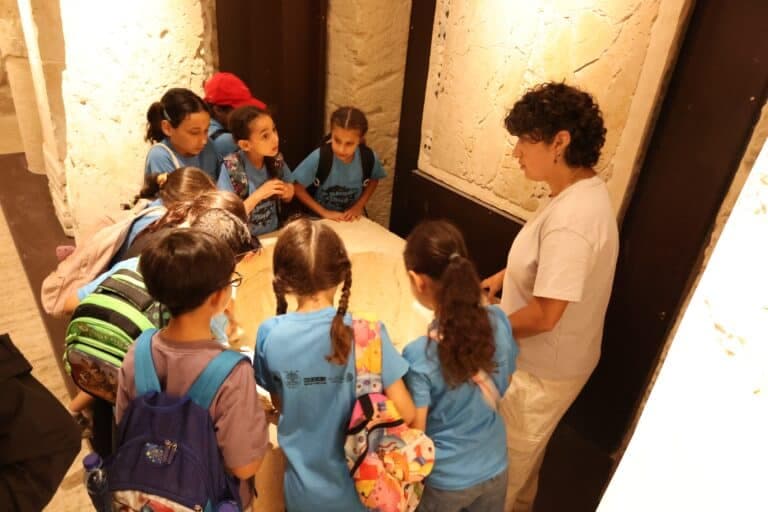
During 2025, the project entered a new and important phase: a collaboration was launched with the CREA research center (Center for Education through Art and Cultural Heritage Mediation in the Territory and in Museums) of the Università Cattolica del Sacro Cuore. Through its Master’s program in Educational Services for Museums and Cultural Heritage: Knowledge, Practices, and Innovation, it trains the local educators of the Hakayeth Turath team (Stories from the Heritage in English)—a group of ten young people aged between 20 and 30 who handle educational activities and cultural mediation for museum visitors, from children to adults. These coordinated activities gave rise to a series of experiences that transform cultural heritage into a living tool of identity and belonging.
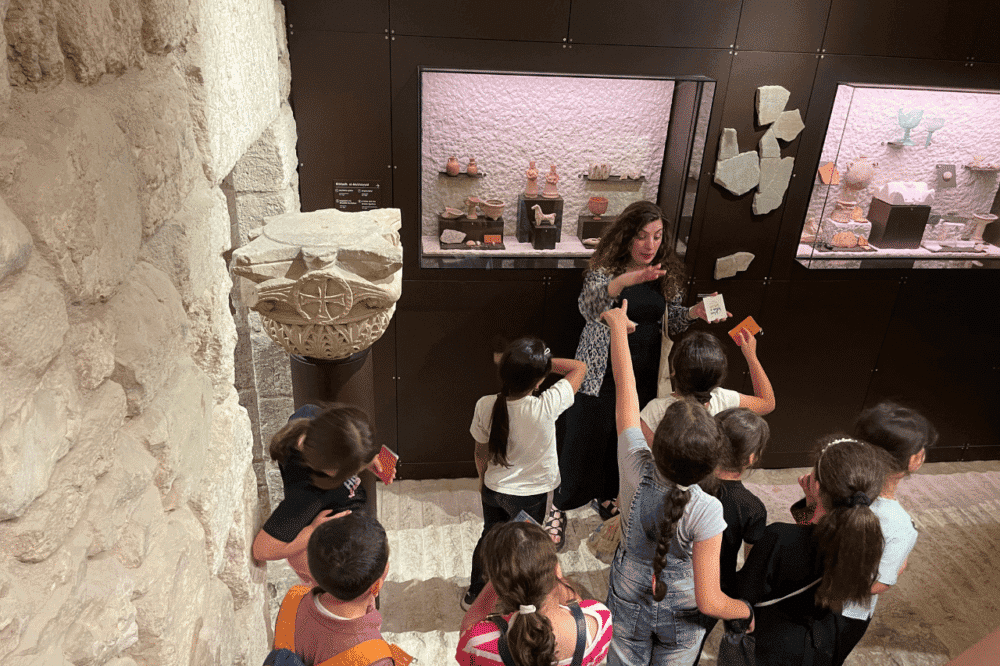
At the TSM, participants rediscovered ancient craftsmanship techniques, ranging from working clay for oil lamps to stone carving, thanks to practical workshops developed with local artisans who are still the custodians of these traditions. Dialogue with other cultural spaces in the city sparked collaborations with the Palestinian Museum and the Palestinian Heritage Museum, where the youths tried their hand at simulated archaeological excavations and cyanotype workshops, capturing the traces of their natural heritage using sunlight. Among the most innovative experiences, the Acted Tour brought three young artists to transform the museum into a stage, with a site-specific performance presented at the Open Day on July 12 in front of a large and engaged community. The Secret Garden Tour, on the other hand, turned every visitor into an active protagonist: armed with a brochure featuring the profile of an artifact, participants search for it through the halls, reinterpreting it through their own gaze and sharing its story with the group.
In 2025, these activities reached over 1,480 people, including 1,294 children and youth from East Jerusalem who benefited from socio-educational and cultural heritage activities, 187 adults and parents, and 13 young professionals from the cultural and museum sector.