

In Gaza, the initial storm has passed, but no reconstruction work has begun. Official estimates speak of over 80% destruction, yet the entry of essential materials like cement, iron, wood, or glass remains blocked, preventing any repair of the damage.
The population literally lives in a void, adapting to reside on top of ruins or inside tents bought at exorbitant prices due to ruthless speculation. In this dramatic scenario, even the most ordinary action has become incredibly difficult: there is no electricity, banks have been razed to the ground, and a total scarcity of cash pairs with terrifying hyperinflation, where even a simple plastic lighter to burn wood and heat food can cost 70 shekels (around 20 euros).
The Holy Family Parish
In this desert of rubble and speculation, the religious leaders of the Latin parish have remained by the community's side. The facility is close to the military line, surrounded by constant tensions, yet it remains a lifeline for the entire neighborhood:
The Reopened School: The biggest gamble is the reopening of the parish school. 460 students, both Christian and Muslim, have returned to their desks. Finding pencils and notebooks is still extremely difficult.
Energy and Connectivity: With solar panels almost totally destroyed, the parish spends exorbitant amounts on diesel (€10 per liter) just to guarantee minimal electricity and communication links.
Access to Water: While destroyed sewage systems contaminate public water—causing epidemics of dysentery and skin infections among children—the church's underground cistern miraculously continues to quench the thirst of thousands of people.
A Network of Care
To respond effectively to the emergency, we work in a network with local partners—a synergy that allows us to optimize logistics and deliver targeted aid directly to the most vulnerable population.
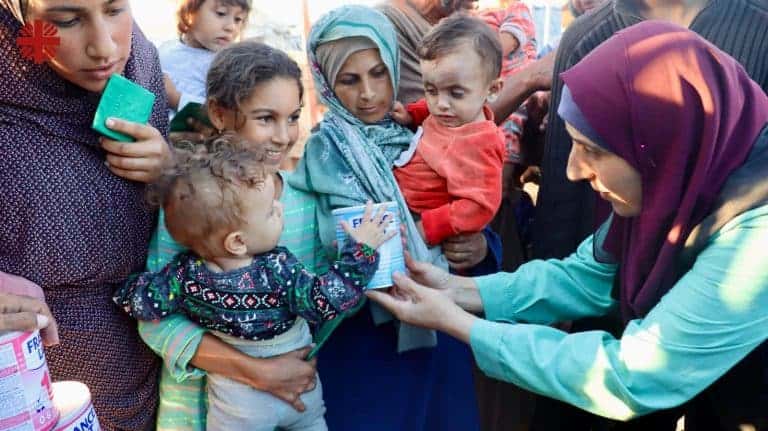
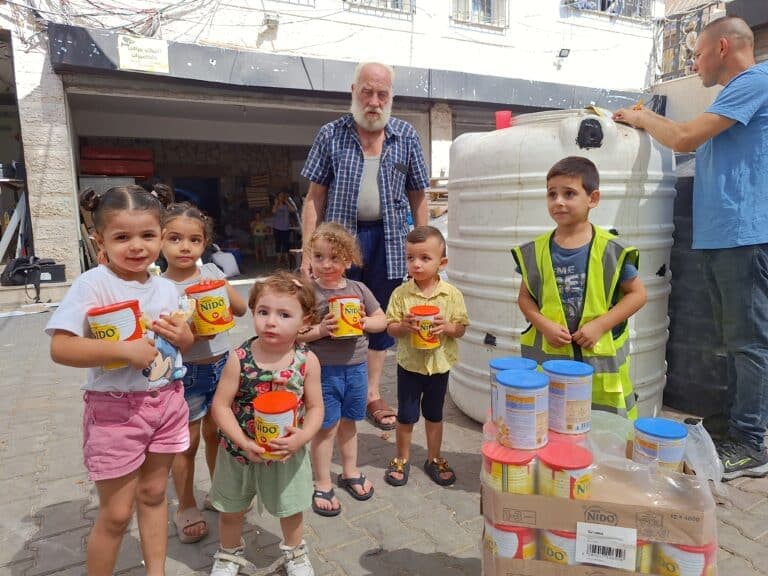
Within this framework, our collaboration with the Atfaluna Society for Deaf Children, launched in 2024, operates through two specific interventions focused on health, nutrition, and psychosocial support. The first guarantees rehabilitation services and psychological care for adolescent girls with and without disabilities, alongside the provision of assistive devices. The second focuses instead on the health and nutritional response, securing families' access to essential medical care, health education activities, and the distribution of emergency nutritional aid. This joint effort has reached approximately 1,000 direct beneficiaries, including children, adolescents, the elderly, people with disabilities, and pregnant women.
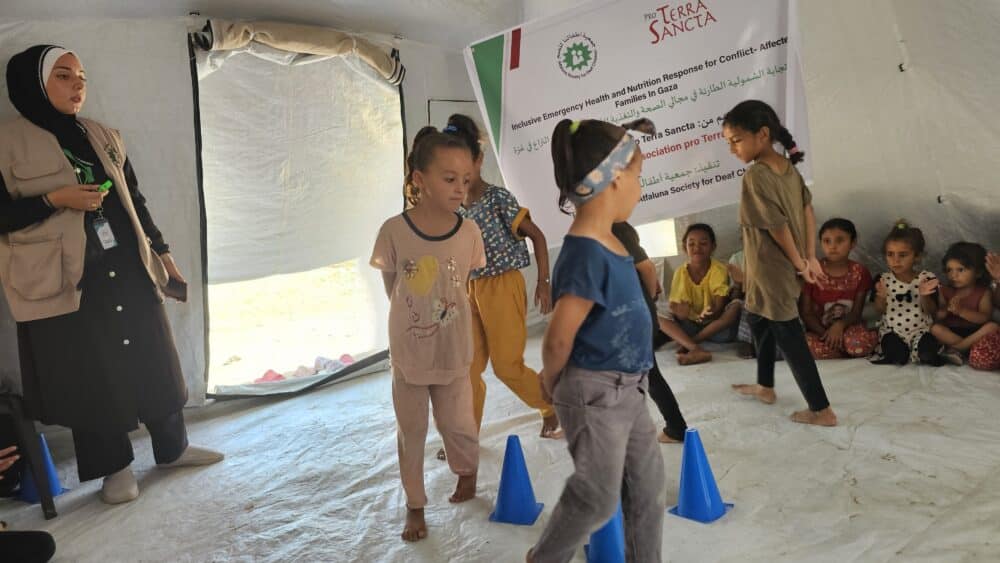
In parallel, we have been collaborating with Caritas Jerusalem since 2024 on specialized interventions aimed at restoring mobility and physical autonomy for those who have suffered severe injuries due to the conflict. Through this initiative, specialized clinical assessments are carried out for the production and distribution of customized prosthetics for amputees, as well as tailor-made orthopedic devices for injured children. The program includes physical rehabilitation cycles, which are essential to reduce the long-term impact of disability, and has already provided concrete aid to approximately 200 people.